May 11, 2026
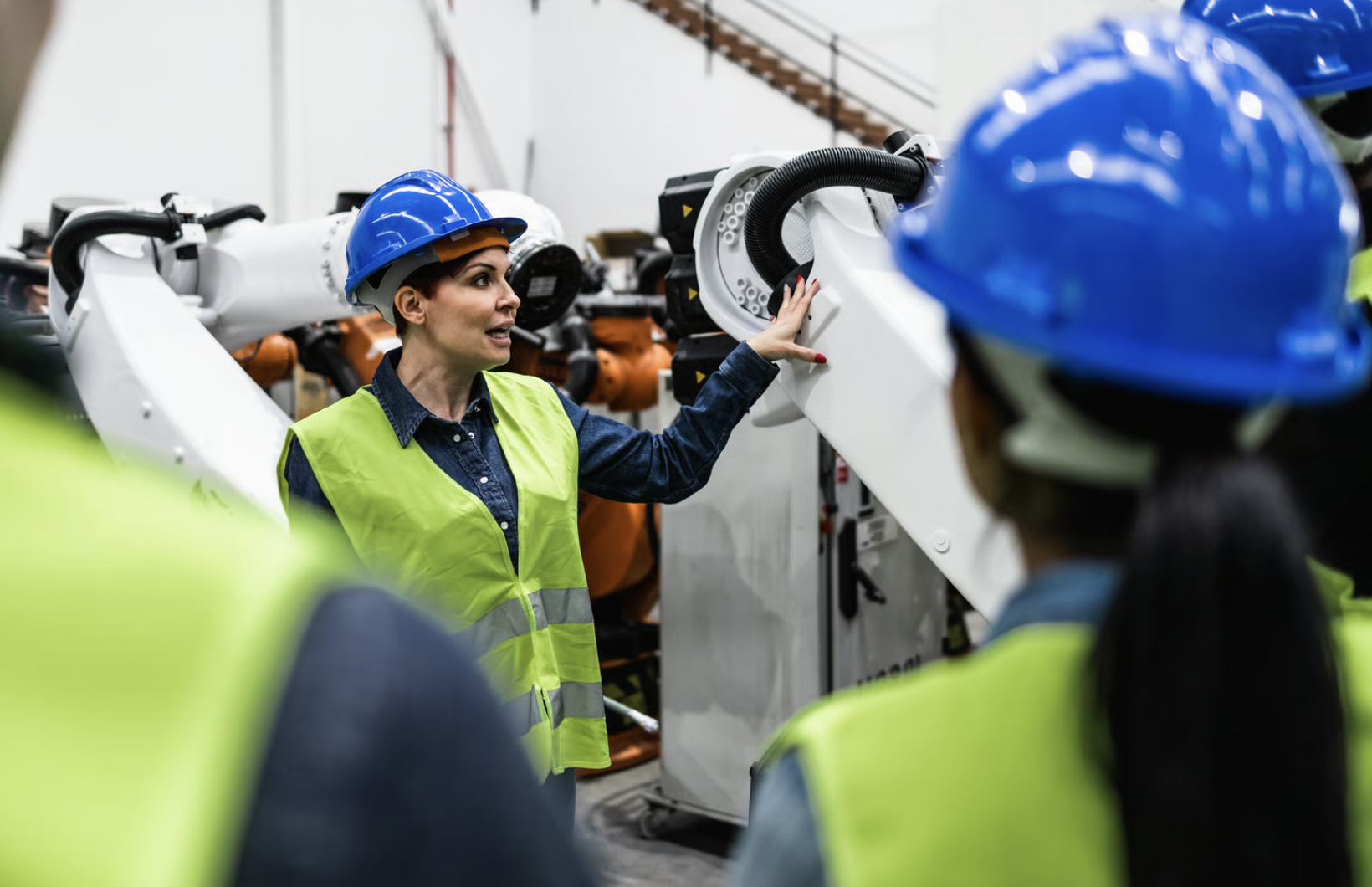
Stop searching for unicorns. In 2026, the best trade employers are bridging the skill gap by hiring for unteachable grit and training for tech on the job.
The skilled trades are undergoing a massive, irreversible evolution. As we push through 2026, the image of the blue-collar worker armed with nothing but a hammer and a paper blueprint is entirely outdated. Today, heavy machinery cabs are filled with digital diagnostic dashboards. Commercial HVAC systems are monitored via cloud-based software. Fleet logistics are completely driven by algorithmic routing. The modern job site is a highly technical environment.
This rapid digital transformation has created a terrifying scenario for trade business owners: the 2026 skill gap.
On one side, you have a retiring generation of master tradespeople who possess decades of physical intuition but refuse to touch a tablet. On the other side, you have a younger generation that can navigate any software interface flawlessly but lacks the physical resilience to endure a twelve-hour shift in the mud. As an employer, you are caught in the middle, desperately searching for a candidate who has both the hardcore field experience and the digital fluency to run modern systems.
You are searching for a unicorn. And that search is actively destroying your profit margins. To survive and scale in the modern industrial landscape, you have to completely rewrite your hiring playbook. The new meta for 2026 is incredibly straightforward: you must relentlessly hire for raw grit, and you must build the internal infrastructure to train for tech.
The biggest mistake construction firms and logistics companies make today is treating software proficiency as a non-negotiable hiring requirement for field workers.
Foremen and HR departments write up job descriptions demanding ten years of heavy commercial concrete experience alongside mandatory fluency in Procore, Bluebeam, and digital inventory management. When you demand this impossible combination, your job posting sits completely empty for six months. More job listings will not fix a hiring strategy built on unrealistic expectations, and during those six months, your current crew will be forced to work massive amounts of overtime to cover the labor shortage. They get burned out, the quality of their work drops, and your project timelines are blown to pieces.
You are holding your own business hostage because you are demanding that the open market provide you with a fully finished, perfectly polished product. The reality of the 2026 skill gap is that the market cannot provide that for you anymore. You have to manufacture that perfect employee yourself. And the only way to manufacture a highly technical, modern tradesperson is to start with a base material that will not break under pressure. That base material is grit.
You can send a worker to a weekend seminar to learn how to operate a drone for site surveying. You cannot send a worker to a weekend seminar to learn how to show up on time, endure freezing rain, and embrace the brutal physical realities of the job.
Grit is unteachable. It is a psychological baseline that a worker either possesses or they do not. When you prioritize digital skills over physical and mental resilience, you end up hiring people who look fantastic on paper but completely wash out the first time a project goes sideways. In the trades, things always go sideways. The blueprint is wrong, the materials are delayed, or the weather turns hostile. When the environment devolves into chaos, software proficiency does not matter. The only thing that matters is the worker's ability to bite down and push through the friction.
To build a resilient crew in 2026, you need to identify applicants who possess the three core pillars of unteachable grit:
When you find a worker who possesses these three foundational traits, you have secured a blank canvas of massive potential. You do not need them to understand your specific digital time-tracking software or heavy equipment diagnostic interface on day one. You simply need them to have the mental fortitude to stick around long enough to learn it. A worker equipped with raw grit will view the introduction of new technology not as an impossible hurdle, but as just another physical tool they need to master to get the job done faster.
There is a deeply insulting myth in the corporate world that blue-collar workers are incapable of learning high-level technology. This is entirely false.
If a diesel mechanic can successfully tear down and rebuild a massive, highly complex transmission with thousands of moving parts, they can absolutely learn how to navigate a fleet management app on an iPad. If a journeyman electrician can memorize hundreds of pages of complex, intersecting municipal fire codes, they can easily learn how to input their daily reports into a digital cloud system.
Software companies spend billions of dollars every year specifically designing their user interfaces to be as simple and intuitive as possible. The technology is literally engineered to be easy to learn. The physical execution of the trade is objectively the hardest part of the job. Employers have the equation completely backwards. They are terrified of teaching an intuitive software program to a tough worker, so instead, they try to teach the brutal, exhausting realities of the physical trades to a soft, tech-savvy applicant. The latter will fail one hundred percent of the time.
By taking the burden of tech training upon yourself, you unlock a massive pool of highly reliable, hard-working local talent that your competitors are actively ignoring. You hire the guy with the muddy boots, the calloused hands, and the perfect attendance record. You bring him in-house, you hand him the tablet, and you spend two weeks training him on the digital systems. You are making a minor, short-term investment in technology training to secure a massive, long-term return on physical reliability.
The traditional hiring process makes it impossible to hire for grit. A standard paper resume is just a list of dates and buzzwords. It tells you absolutely nothing about a candidate's mental toughness or their ability to execute in harsh conditions.
We built Collars to cut through the corporate fluff and show you the actual reality of the worker. Our platform is designed specifically to help trade employers identify the resilient, high-character professionals needed to bridge the 2026 skill gap. Here is how Collars helps you find the right foundation for your crew:
By relying on a platform that highlights undeniable visual evidence and direct communication, you completely bypass the polished, text-heavy resumes that hide a lack of real-world resilience. You gain the ability to accurately identify the toughest, most dedicated workers in your local market, giving you the perfect foundation to train the next generation of highly technical tradespeople.
The 2026 skill gap cannot be solved by holding out for perfect candidates who possess both decades of field experience and flawless software fluency. To scale your operations and protect your profit margins, you must adopt the new hiring meta: secure the unteachable traits of resilience and reliability first, and provide the technical training in-house. Collars provides the exact digital infrastructure trade employers need to visually identify, verify, and connect with the high-grit professionals who are ready to learn your systems and anchor your local crew.
Download the Collars app today. Bypass the outdated resumes, hire for unteachable grit, and build a modern workforce that actually gets the job done.
Download our the Collars app now and start applying now.
Download

Collars is building a better future for the trades, by matching applicants and employers through a platform designed for real people, lasting careers, and the next generation of tradespeople.
.svg)